grandson jaxson

grandson jaxson
grandson jaxson

granddaughter coraline

granddaughter coraline

grandson mason

grandson mason
grandson mason

Tuesday, April 5, 2011

04/05APR11 - Holbrook, AZ (petrified forest national park)

Monday, 04APR, was a very scenic & leisurely drive on “old” US180 from Silver City, NM, to Holbrook, AZ. After checking into the RV park, it was off to Jim Gray’s Petrified Wood Co. This is one of those “old fashioned” roadside attractions that lined the old two lane highways back in the day, trying to catch your eye & get you to stop; & as always in the back seat were several kids screaming “Can we stop?” “Can we stop?” Even though a tourist trap, some of the things made from petrified wood were extremely beautiful (if not very expensive)! http://www.petrifiedwoodco.com/

Upon returning to the RV Dan went on a photo hunt of eccentric sites in the Holbrook area. The “theme” for the area seems to be dinosaurs? Every business on the original alignment of Route 66 seems to have at least one, two, or more dinosaurs out front. One of the interesting ones, was very a detailed cast bronze dino made for someone in the Phoenix area for their pool area. Turns out the bronze casting was too heavy to lift over the house via crane! So the couple donated it to Holbrook.

Monday night we decided to have dinner at Butterfield Steakhouse on Route 66. This was a “theme” restaurant that was very common on Route 66 from the 1940s to the late 1970s. Every booth has displays of cowboys, Indians, lawmen, outlaws, etc, that supposedly roamed the local area back in the late 1800s. It was a very large restaurant with very few patrons when we were there; the steaks were good but not worth going out of your way for.

Tuesday, 05APR, we headed to the north entrance of the Petrified Forest National Park. Upon arrival at the Visitor Center we viewed the Park Service film & then started driving the park road to the south entrance, stopping at turn-outs to take in the views. The north portion of the park is primarily Painted Desert, & the south portion has significant deposits of petrified wood. While spending the day in the park we caught the Ranger led tour of the Puerco Pueblo & then rushed off to catch the Ranger led tour at the Painted Desert Inn, before driving the rest of the park road south to the Rainbow Forest Museum. Both of these tours were excellent & we highly recommend them if you are in the Park! To us the beautiful sights of the entire park along the 28 mile park drive were an unexpected surprise, & we highly recommended stopping by if you are anywhere close to the Park!

The Pueblo tour was extremely informative about a Pueblo that might have housed 1200 people; & had the added bonus of the Ranger pointing out Petroglyphs below the trail. The Painted Desert Inn was a “business venture” built by Herbert Lore out of slabs of petrified wood. Because Lore did not understand the instability of the ground he built on, the original Inn (aka Stone Tree House) was a maintenance nightmare! Eventually he sold the Inn to the Federal Gov’t; & in the late 1930s the CCC tried to stabilize the structure, while expanding it, & covering the petrified wood structure in a SW adobe style. In addition the CCC added some exquisite painted glass skylights. In the 1970s the Inn narrowly escaped demolition & now the Park Service is trying to extend the “uses” & open hours of the Inn for expanded use. Not to be missed in the Inn are the murals by Hopi artist Fred Kabotie, from the late 1940s!


Trivia – what National Park has a portion devoted to Route 66? What was the first National Park that had a portion of its area designated National Wilderness? http://www.nps.gov/pefo/index.htm

Monday, April 4, 2011

01-03APR11 - Silver City, NM (catwalk trail)

After Dan toured the New Mexico Farm & Ranch Heritage Museum in Las Cruces, NM, we finally hit the road to Silver City, NM. We have visited Silver City twice before while staying in Deming, NM (see below BLOG links). We have found Silver City an interesting place & had wanted to stay in a RV park near the city to explore if further. As we have noted before, the city is a unique mixture of cowboys & farmers, aging hippies, many artists, new-agers, etc.


Upon arrival we learned that today, 01APR, was a “First Fridays Downtown” in Silver City; which apparently consists of a street dance, costume contest, stores open late, street performers, etc. So we decided to check it out & find a place for dinner. While window shopping on the main boulevard we discovered the Shevek & Co Restaurant. The Chef apparently learned cooking from his Jewish Grandmother in a multi ethnic neighborhood in New York City, followed by working in restaurants all around the Mediterranean, before graduating from the Culinary Institute. Needless to say the food was excellent, & best of all every item on the menu could be ordered in one of three sizes – tapa, mezze & entrĂ©e. We stuck to the tapa size & sampled eight different items & two desserts. We caught the end of the First Fridays Downtown & were not impressed, especially when it wrapped-up at 8PM.


Saturday morning we headed to the Catwalk Trail in Whitewater Canyon in the Gila National Forest five miles east of Glenwood, NM. This is a great hike through a very narrow canyon with some portions on cantilevered catwalks; very similar to the Johnston Canyon hike we took in Canada’s Banff National Park back in September 09. The trail follows the route of a four inch pipeline built around 1893 that brought water to an ore mill located at the mouth of the canyon. The pipeline had to be raised above the canyon floor & cantilevered to protect it from flash floods. Eventually the CCC was tasked with turning the remnants of the pipeline structure into a trail.


We were going to hit the road on Sunday, 03APR, but the weather service predicted high winds gusty to over 70 mph (equivalent to a category 1 hurricane). So we decided to stay one more day & not risk being on the road.


Late Sunday afternoon Dan went on a driving tour of Fort Bayard in spite of the gusting winds. The fort started in 1866 as a typical Army post used to suppress the Indians. Buffalo Soldiers were also stationed here, several of whom received the Medal of Honor. One Buffalo Soldier was Will Cathay (aka Cathy Williams), the only known female Buffalo Soldier. Rather than being abandoned in the late 1890s like many others, Fort Bayard became the first Army tuberculosis sanatorium. In 1922 the complex was transferred to the Veterans Bureau & continued to treat tuberculosis, as well as Veterans of WWI & WWII. In 1965 the Fort complex was transferred to the state of New Mexico which operated it as long term health care facility until 2010. In 1974 the Fort’s cemetery was designated as a National Cemetery. Unfortunately, almost all of the buildings are visibly deteriorating while the state tries to find funds to stabilize it & eventually restore it.


Thursday, March 31, 2011

29-31MAR11 - Las Cruces, NM

Our first stop before departing Carlsbad on Tuesday morning, 29MAR, was at a Exxon station closed for remodeling. Turns out that you could still purchase diesel by paying with a credit card at the pump; & we are guessing that since they did not have to pay any employees, their price was ten to fifteen cents a gallon cheaper than any other station. Rather than drive on I-10 west through El Paso, TX, to get to Las Cruces, NM, Dan decided to go north on a secondary road via Cloudcroft. The last portion of this route is very steep & curvy with many warning signs for truckers about the steep grade; in fact our next door fellow RV’er couldn’t believe we were taking that route. End result was that it was a very scenic drive, with the last fifteen miles a bit of a challenge (but we have driven worse) & we avoided the “madness” of I-10 through El Paso. We set up camp & headed to the village of Mesilla for dinner.


We have visited Mesilla a few times already. The first time was back in 2005 when we met Dan’s sister, Sharon, & hubby, Tim Tompkins, there in our old gas RV, & spent a few days exploring. The last visit was almost a year ago (see below BLOG link) when we were El Paso for over a week. Mesilla has been a historic town as a part of Mexico & later as part of the USA as a result of the Gadsden Purchase. At one time it was the territorial capitol of Arizona & New Mexico. The town of Las Cruces would not be the second biggest city in NM if the citizens of Mesilla had not declined the railroads offer to run through their town. End result of their decision was the train line went to Las Cruces & Mesilla turned into a sleepy little village, surrounded by the ever growing Las Cruces. We had dinner at La Posta an establishment we had walked by before on previous visits. Apparently it is one of those must do things for tourists & we always saw people waiting to get in. We got their early & avoided the crowds. We found the food no better than most TexMex restaurants, but Dan enjoyed their Chili Rita.


Wednesday morning, Dan headed to the White Sands Missile Range Museum & Missile Park. The museum is being reorganized & most of the video equipment was not functioning, but Dan still found it fascinating. In addition to missile “history”, the museum also had displays on Mimbres pottery, early settlers, Bataan Death March Buffalo Soldiers, NASA, Victorio War, & other non-missile topics. About the Victorio War one 2nd LT Finley wrote – “It is the old story, unjust treatment of the Indians by the Govt., treaties broken, promises violated and the Indians moved from one reservation to another against their will, until finally they break out and go on the war path and the Army is called in to kill them. It is hard to fight against and shoot down men when you know they are in the right and are really doing what our fathers did in the Revolution, fighting for their country.”


Upon viewing the Bataan Death March display, it reminded Dan that we had seen Memorials to the event in many NM towns & we had even driven on the Bataan Memorial Highway. There is even a Bataan marathon on the missile range each year. Now he wondered why this tragic event was so significant to NM? Turns out that one of the largest USA units in the Philippines at the start of WWII, was the 200th Coast Artillery from New Mexico. They had been sent to the Philippines because many of them spoke Spanish. They held the Japanese off for four months with inferior weapons & no food before surrendering & then enduring the infamous march. By the end of the war NM had the most per-capita casualties of any state, & only half her men came home!


Another display was of an original German V2 rocket. This is a stand alone exhibit in its own building with a very detailed description of the German development program; along with details of the USA’s “race” to beat the Russians in seizing as many German scientists & V2 actual components before the war ended. The scientists were easy, since many of them fled to the west into the arms of the USA Army rather than be captured by the Russians. The Americans discovered a V2 factory in Nordhausen, Germany, an area that was to be handed over to the USSR. The Army quickly removed everything & shipped it west. The end result is in August of 1945, 300 railroad cars of V2 “stuff” showed up in Las Cruces, New Mexico, & every railroad siding for 210 miles was used to hold the freight cars. It took another 30 days to bring everything to the newly created White Sands Proving Ground (original name).

Trivia – more V2s were fired at targets on the continent of Europe than at the UK, what city was the primary target of 1,780 of these rockets (think diamonds)?


One of the most interesting “displays” was a photo album put together in 1999. It contained photos taken by a young Army enlisted man who was stationed at a very remote facility of the missile range sometime in late 50s or early 60s? The person that put the album together also penned some words about his recollection of what was occurring in each photo. To Dan it reminded him experiences of countless young men in the military - trying to keep their cars running with little or no money, chasing women, trying to fool the sergeants & officers, using their last dollars for beer & cigarettes, trying to sleep during duty hours, etc; while enduring the pettiness of military regulations & countless hours of boredom. One quote was about a rare party with women from the Womens Army Corps (WACs) - “Most of the women were wilder than the antelope.”


Trivia – how did the Army locate missile parts in the remote desert after test firing (think squalene)?


After Dan rejoined Corrie, it was off to explore the eccentric roadside attractions in Las Cruces. We discovered an armless Muffler Man, El Toro the Bull w/his blue balls, & a giant Geronimo statue by Peter Toth. For some reason Mr Toth started carving monumental statues in honor of Native Americans in 1972, & decided to place one in every state in the USA! Some states have more than one, & some of the statues have since “disappeared”. According to his below website, there are 55 statues in the USA & 2 in Canada. Something else for Dan to seek out on our RV journey! http://www.dcschumaker.com/ http://www.dcschumaker.com/statues.htm


Thursday morning, 31MAR, we had hoped to accomplish two “chores” & then hit the road toward the Gila Wilderness Area & the town of Silver City, NM. First thing to accomplish was having our TV antenna system checked out to determine way we can no longer receive the over-the-air digital TV transmissions we used to get? For those of you who receive your TV via cable or phone lines, you may not see the necessity of an old fashioned antenna. When the federal gov’t mandated all broadcast stations switch to a digital transmission it cost the stations money to make the shift, but the stations also received a benefit – instead of one frequency to transmit on, they now can have multiple channels showing different shows at the same time! For example, channel 4 in Las Cruces is now 4-1, 4-2, 4-3 & 4-4; all with different shows being broadcast at the same time.


In addition, we have found that that the cable in RV parks is often not digital quality, let alone HDTV. But the over the air broadcasts by law must be digital, & often are true HDTV. So in cities with ABC, NBC, CBS, Fox, PBS, Univision, etc, we should get fifteen to thirty or more digital broadcast stations. However, starting about three months ago we noticed that we could only pick up two or three stations, & often none. Dan changed out several components of the system with no luck & finally determined the problem was in the RV roof between the antenna & the 12 volt booster. So we made an appointment at Camping World of El Paso to troubleshoot & fix. Joe the technician disassembled the antenna & determined that one of the fittings in the roof was rusted beyond repair – problem solved.


Second item on the “to do” list was pick up our mail being forwarded to us from Texas. Unfortunately, it did not arrive, so it was back to the RV park we had just checked out of this morning for another night in Las Cruces.


Friday morning rather than wait around for the mail Dan headed to the New Mexico Farm & Ranch Heritage Museum. This is an excellent museum obviously depicting farm & ranch heritage in the Las Cruces area; but also had two unique displays – the history of the postcard in the USA, & a display about the Dust Bowl. Dan learned that the postcard was an Austrian invention in 1869, & was first issued by the US Post Office in 1873. Postcards in the USA remained a government monopoly until 1901, & it was illegal to write on the back side of the card, forcing people to write their message on the artwork on the front until 1907. Dan was surprised to learn the “dust bowl” was an event that lasted several years, & that the storms on rare occasion reached the west or east coast! In fact, one storm even reached Washington DC, on 21 March 1935, one week before Congressional Hearings on the matter. A dust bowl joke at the time was – “I hope it’ll rain before the kids grow up. They ain’t never seen none.”


While at the museum Dan also learned that the state is promoting a Green Chile Cheesburger Trail, apparently because green chile cheeseburgers have been getting a lot of play on TV food networks. All too soon Corrie called Dan & told him it was time to check the mail, so Dan had to cut it short & head back to the RV.

Tuesday, March 29, 2011

27/28MAR11 - Carlsbad, NM (guadalupe mountains national park)


We previously visited Carlsbad, NM, & the world famous caverns located there a year ago last March. When we departed Carlsbad & drove to El Paso, TX, we were very impressed with the silhouette of El Capitan located on the southern edge of Guadalupe Mountains National Park, & placed the Park on our list of places to visit in the future. Unfortunately, the Park entrance is not “convenient” to any RV parks, & there are no stores or gas stations close to the Park. So this year we decided to stay in Carlsbad, NM, & “commute” in the Toad to Guadalupe Mountains National Park.


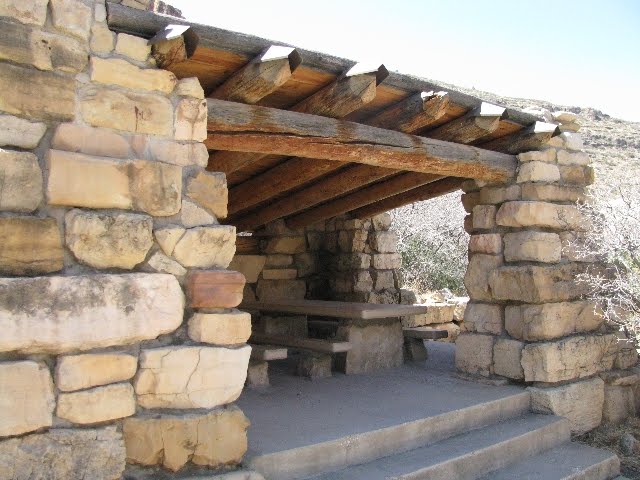
After setting up camp on upon our arrival Sunday, 27MAR, Dan decided to drive the Toad to Sitting Bull Falls in the Lincoln National Forest. The Falls are a day use facility of the National Forest that has many stone picnic shelters in a very scenic setting. No one knows why the falls are called Sitting Bull, but agree that they are not named after the famous Lakota Sioux Chief who never came close to New Mexico! This area of NM, & most of Arizona & Texas, has been enduring a major drought (some towns have had no measurable rain in more than 150 days); so we were afraid there would be no falls to view. But it turns out that the falls are fed by an underground spring that has never gone dry. After a short hike we came to the falls; although not a dramatic “high volume” flow of water, it was still very scenic & a refreshing break from the desert heat.


Monday morning we headed to Guadalupe Mountains National Park, & it was a very windy drive. The Park has less than two miles of roads but has over 80 miles of trails. First thing we did was visit the Visitor Center to watch the slide show & find out if there were any Ranger led activities scheduled (there weren’t). Turns out the Guadalupe Mountains are a small part of a gigantic ancient reef that has only broken the earth’s crust in three locations – Guadalupe Mountains, Apache Mountains, & Glass Mountains. The Park has three distinct climates - Desert Zone, Riparian Zone & Mountain Zone. Unfortunately to see the truly spectacular sites of the Park, usually means a very strenuous hike. For example, to view the alpine environments means a vertical climb of 2000 to 3000 feet!


After visiting the Visitor Center it was a short walk to The Pinery, the ruins of a Butterfield Overland Mail Station. The Overland Mail made two trips a week over a period of 2-1/2 years, carrying passengers, freight and up to 12,000 letters from St Louis, MO, to San Francisco, CA (& vice versus). The western fare one-way was $200, with most stagecoaches arriving at their final destination 22 days later. The Butterfield Overland Stage Company had more than 800 people in its employ, had 139 relay stations, 1800 head of stock and 250 Concord Stagecoaches in service at one time; before the Civil War stopped its operations.


Trivia – what two present day major companies can be traced to the Butterfield Overland Stage (hints – one company still has a stagecoach on its corporate logo; & don’t leave home without the other one)?


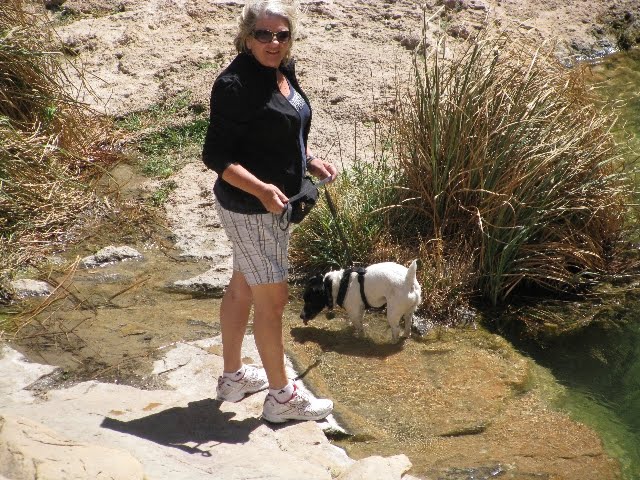
From the Visitor Center it was short drive to the Frijole Ranch; a very well preserved ranch complex consisting of the main house, bunkhouse, spring house, stables, & one room schoolhouse. From the ranch we hiked the Smith Spring Trail, this a 2-1/2 mile loop, rated as “moderate”. Being out of shape, coupled with the rocky terrain & high winds; we rate it as “strenuous”! Once you leave the ranch there are no trail markers to indicate if you are still on the right trail or how far to go. Every now & then Corrie would ask if Dan was sure we were on the right trail? Eventually we made it to Smith Spring, another underground source of water in the Chihuahuan Desert. After returning to the Toad we decided we were so tired, that we would skip the supposedly easier & more scenic McKittrick Canyon Trial. We will just have to make another trip to the region in the future?


Trivia – the Frijole Ranch had a “gas generator” for lighting; since this was before Edison invented the light bulb, how did it work?